Change the language with the flags on the top left.
Sprache ändern mit den Flaggen oben links.
Language Switch / Sprachschalter
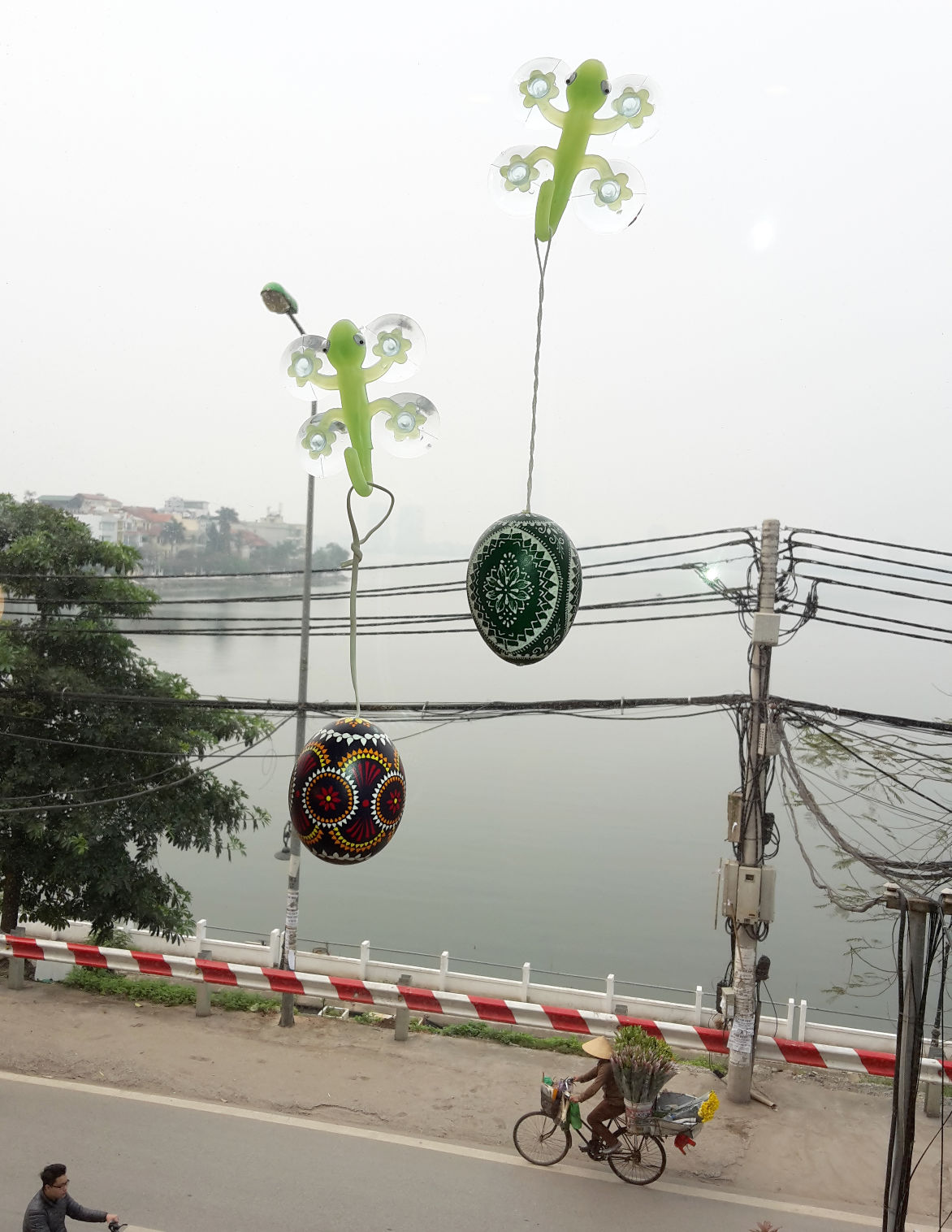
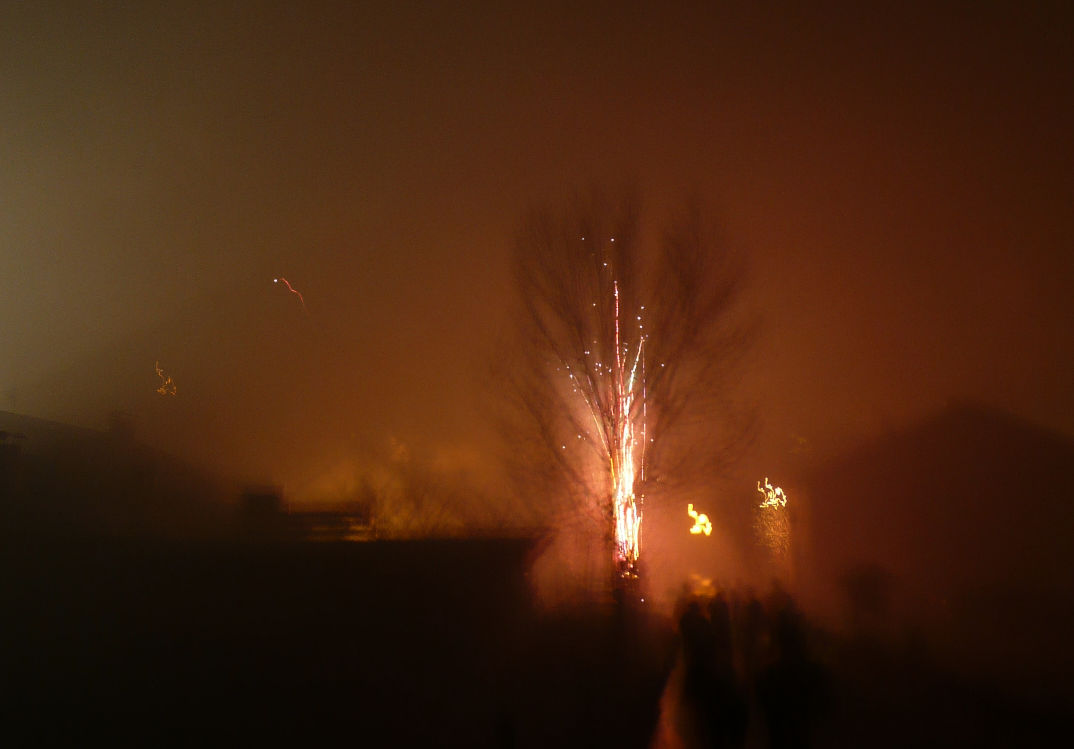
Mono and solo!
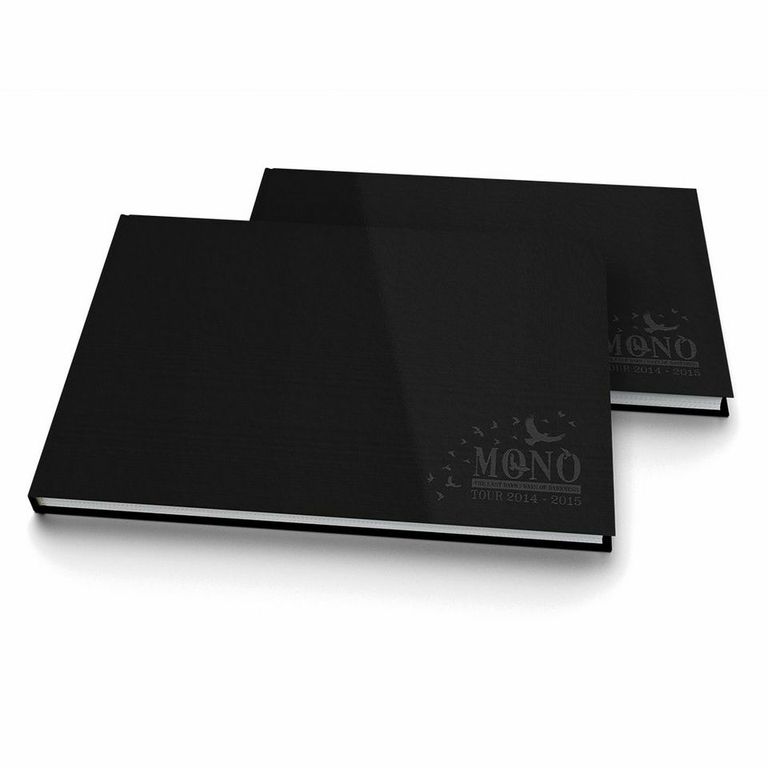
Because I couldn’t see (and, mainly, hear!) Mono live in Dresden last December, I’m even happier about this nice piece: Mono – “The Last Dawn / Rays Of Darkness Tour” Photo-Book + 2×CD.
Facebook plugin
Sadly, the Wordbooker plugin, which published WordPress posts on Facebook and synchronised the comments, is no longer available. Its author seems fed up with over-demanding users, the changing Facebook API and didn’t enjoy coding it any longer. That’s a pity.
Is there a comparable plugin? I don’t want to facebookisise my blog, as the official plugin would, but to announce posts on Facebook and show the comments there also in the blog.
Cody
It’s been a long time since I listened to Mogwai’s “Come on die young”. But still, it’s an amazing experience. Some albums just don’t get old.
I’ve just bought the deluxe edition (Shame on me, up to now I only had a copy a friend made for me.) and am quite curious about what’s on the “appendix” disc. (You can listen to it at the Guardian.)
The blog’s alive again
Nothing much has happened here for quite some time – sometimes due to lack of time, sometimes due to lack of stuff to write about. But in mid-September, my provider disconnected my blog because of a DDos attack, which started to impacted their server.
Food carrier put to proper use
Finally, since almost forever, I can use my food carrier quite as intended
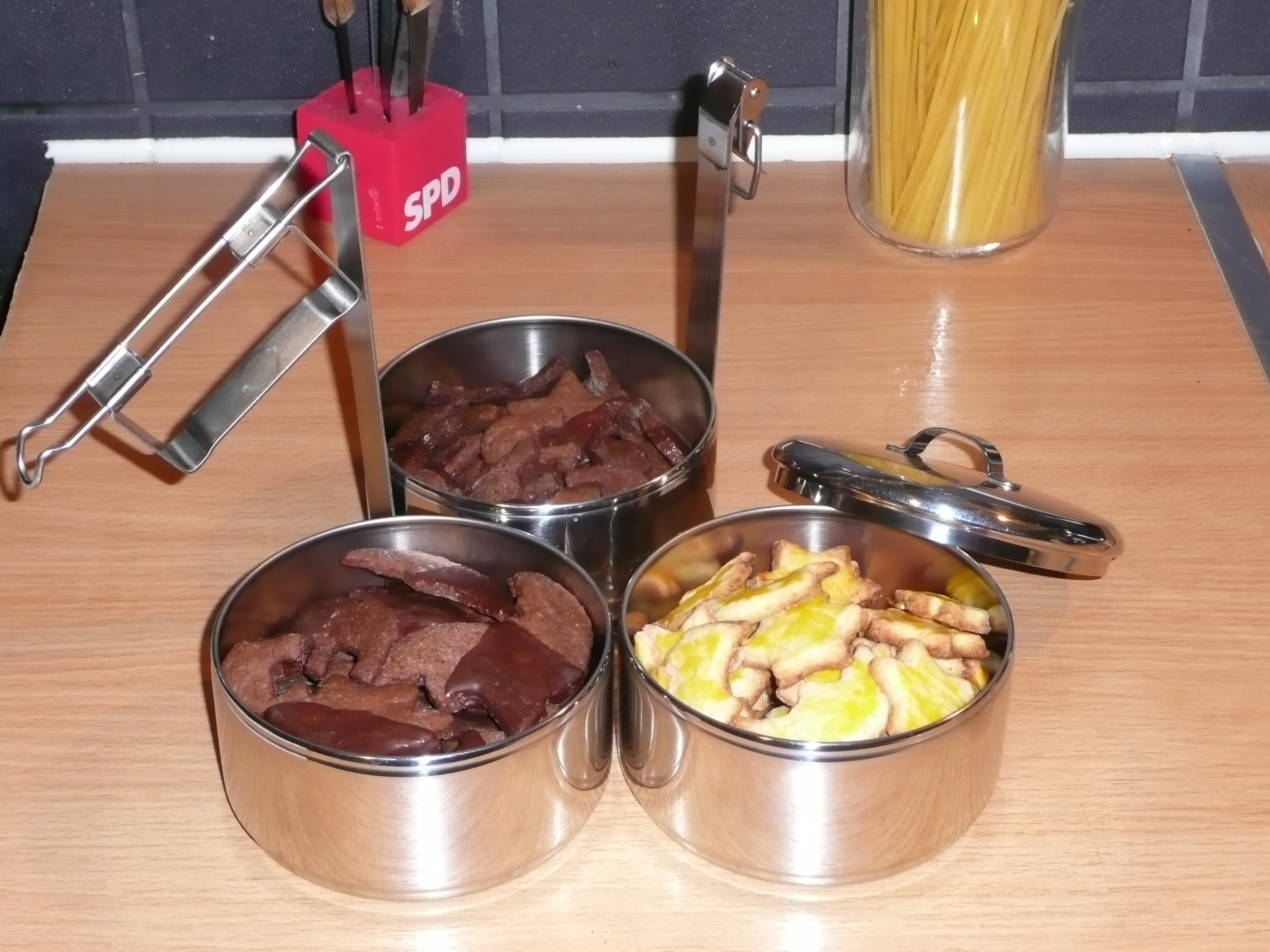
My first try at two of my favorite cookies don't taste bad, but not as well as Mum's Original™. I was struggling a bit with the gas stove which tends to easily burn the cookies.
Of ourse, I cannot keep up with variety and sheer amount produced by others, e.g. the local cookie pirate. But I’ll try next year!
Risk of Stumbling
Evelyn at Georneys is again hosting an Accretionary Wedge, this time about signs that are geologically or geographically interesting.
My contribution is not even really mine, because I didn’t take the photo myself. I have come across the picture several years ago somewhere on the net, but forgot to remember where it was or by whom.
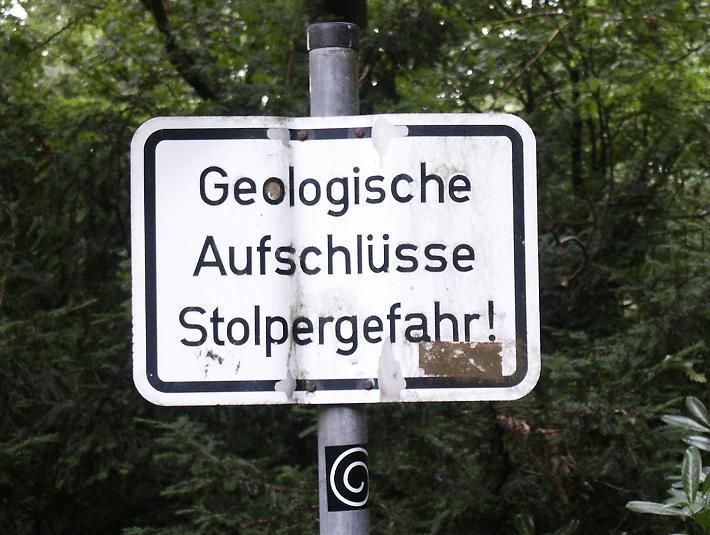
Sign “Geologische Aufschlüsse Stolpergefahr!”
This sign says: “Geological Outcrops – Risk of Stumbling!” Because I only know the sign, I don’t know how dangerous these outcrops are…
There‘s a more recent (Judging by the additional stratistickygraphical layers; however, the folding and erosion had already taken place back then…) photo on Flickr, but it has no detailed information about the location, just that it is in Wuppertal.
Where on Google Earth #389
Some time ago already, I found Luis Filipe Miguel's WoGE 388, a nice alluvial fan at lake Alaköl in Kazakhstan. After that I was away for some days, and now everybody is hungry for a new challenge, so here it is.
If you want to know what WoGE is, see below the fold. Previous WoGEs are collected by Felix on his blog and in a KML file.
Please do not only post the coordinates In your solution, but also outline the general geology of the region and tell us what's so special about the lake in the centre.
This one may be a bit hard because of the lack of features. Therefore I will publish zoomed-out images if noboy finds the location after a few days. I invoke Schott’s rule, so newcomers (and people finding out about the new WoGE too late) have a chance.
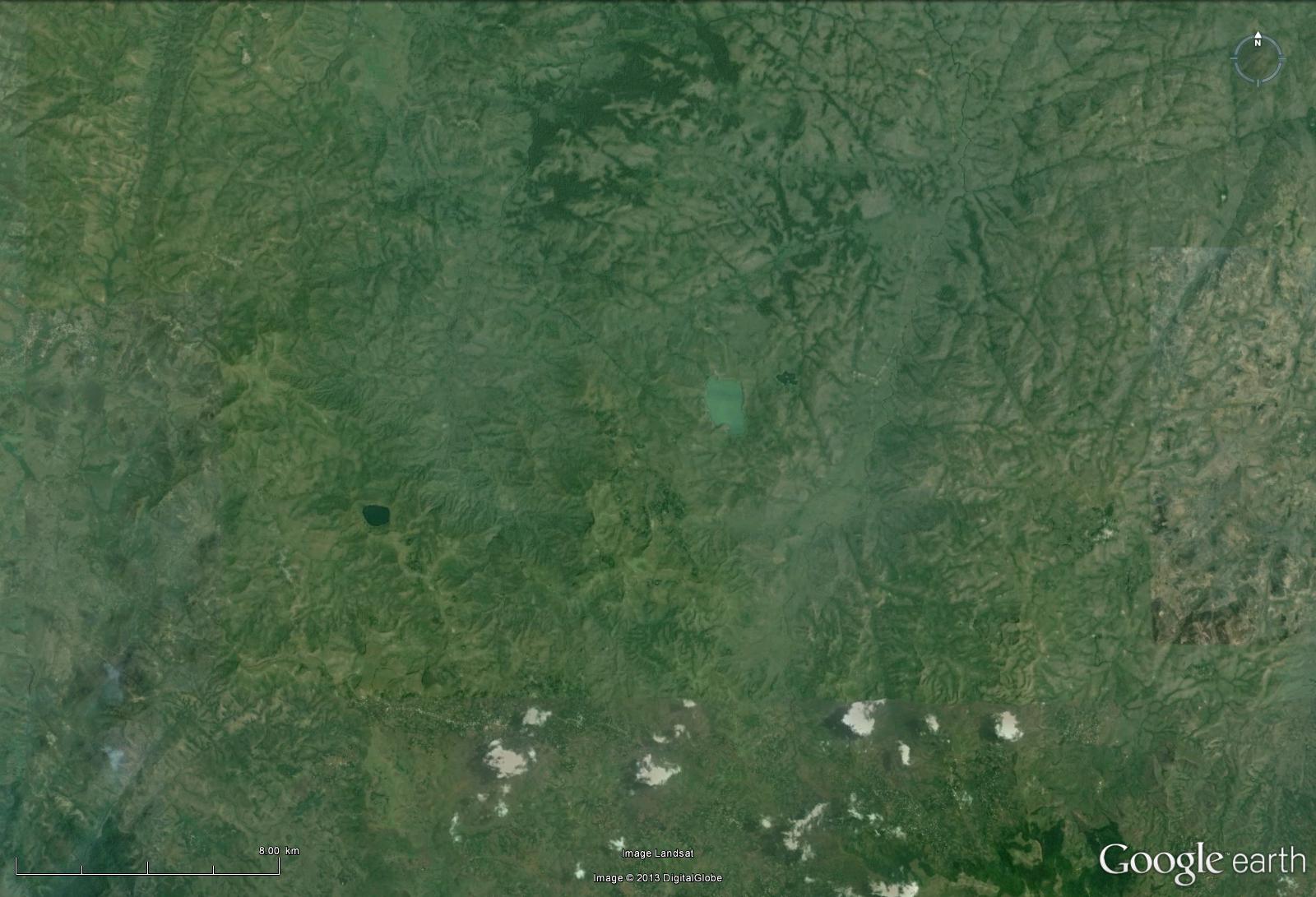
Where on Google Earth #389. Click to embiggen.
Where on Google Earth #383
For the second time now, I found a WoGE by Ole Tjugen. Number 382 was – at first – a rather obvious piece of Swedish coast, but I didn’t realise the significance of this specific spot. Ole’s hint was too subtle for me, so he had to prod me into the right direction – the Ytterby mine of periodic table fame.
If you want to know what WoGE is, see below the fold. Previous WoGEs are collected by Felix on his blog and in a KML file.
I am not completely content with my new picture, because I had to blur the copyright notice. But otherwise it would give too many clues. (I’ll publish the complete image after it has been solved.) I invoke Schott’s rule, so newcomers (and people finding out about the new WoGE too late) have a chance.
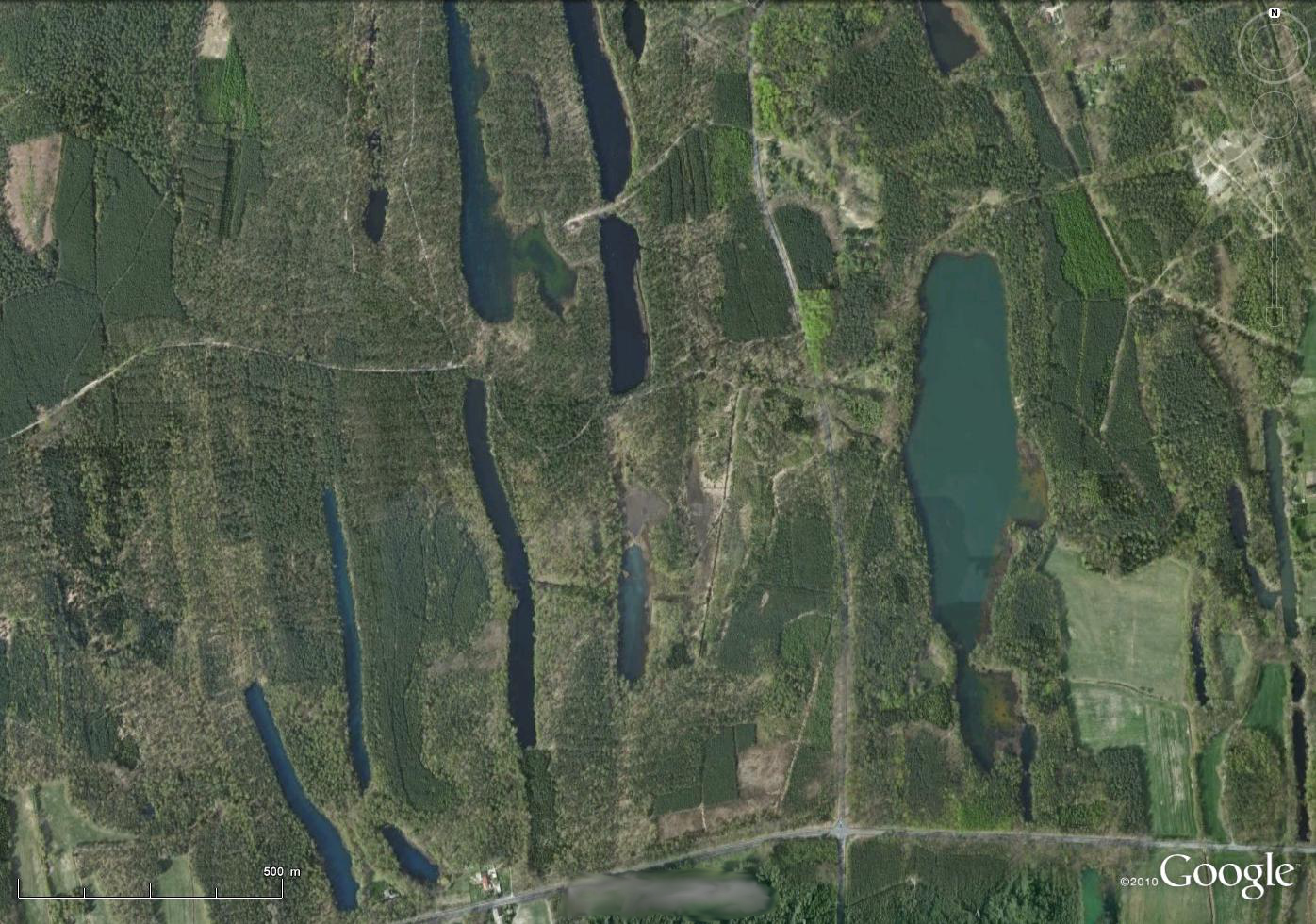
Where on Google Earth #383. Click to embiggen.
The steam-powered permeameter
Evelyn at Georneys is hosting this month’s Accretionary Wedge about seeing geology everywhere. As an example, she showed cute cats exposed to hideous tectonic arrangements. But where I live, tectonics are rather dull, limited to what happens when you remove several hundred to thousand metres of ice from the continent. Because I neither have a cat nor a sufficient amount of ice, and feared repercussions from animal protection groups, I turned to some other field of geology, hydrogeology (which I tend to see everywhere more often anyway).
(Edit 21.06.13 9:15: I added some photos.)

A sample of a porous medium.
Italy is geologically very interesting, and so it is no wonder that the Italian pioneer of household high-pressure fluid dynamics, Desiderio La Pavoni, turned his attention to the basic law describing fluid flow in porous media (like aquifers) which had been discovered by the French engineer Henry Darcy in 1856:
[latexpage]
\[
Q = k_f A i
\]
where $Q$ is the flow through an area $A$ of a porous medium with hydraulic conductivity $k_f$ when a pressure (head) gradient $i$ is applied. The problem is to find $k_f$.
For this, let me introduce the steam-powered permeameter (SPP):
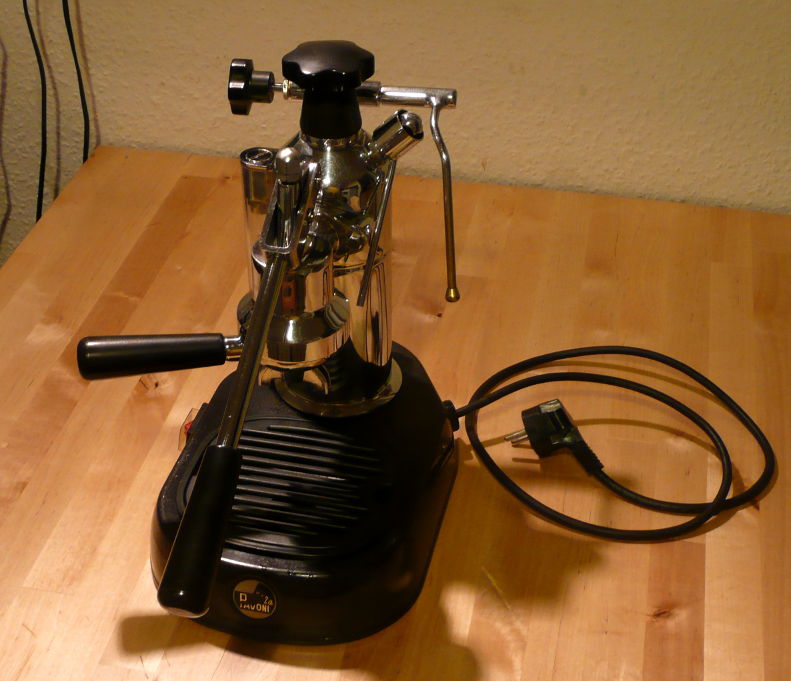
The La Pavoni Europiccola steam-powered permeameter.
Stuffed veal breast
No translation (yet), but delicious pictures:
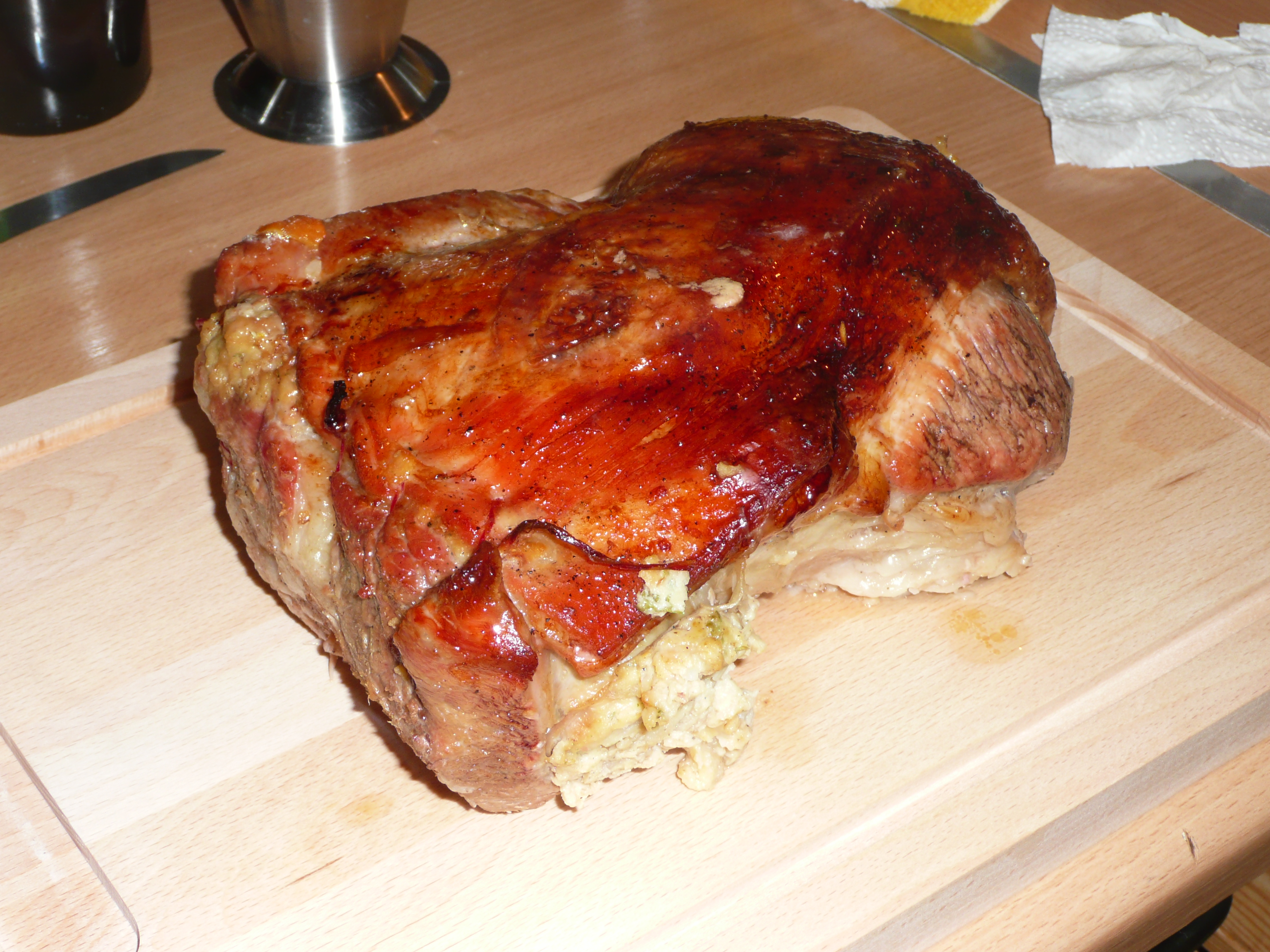
Stuffed veal breast, out of the oven
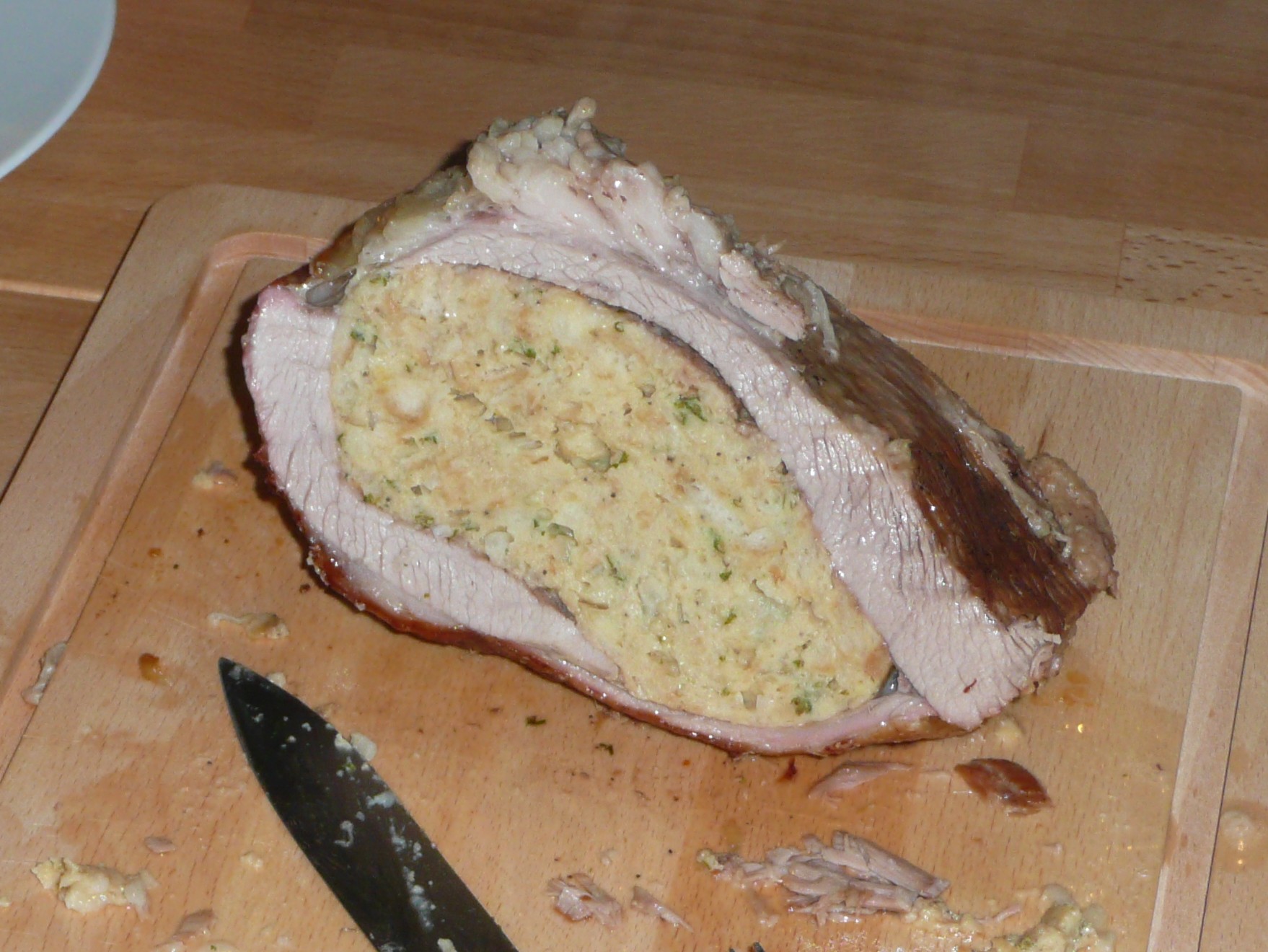
Stuffed veal breast, cut
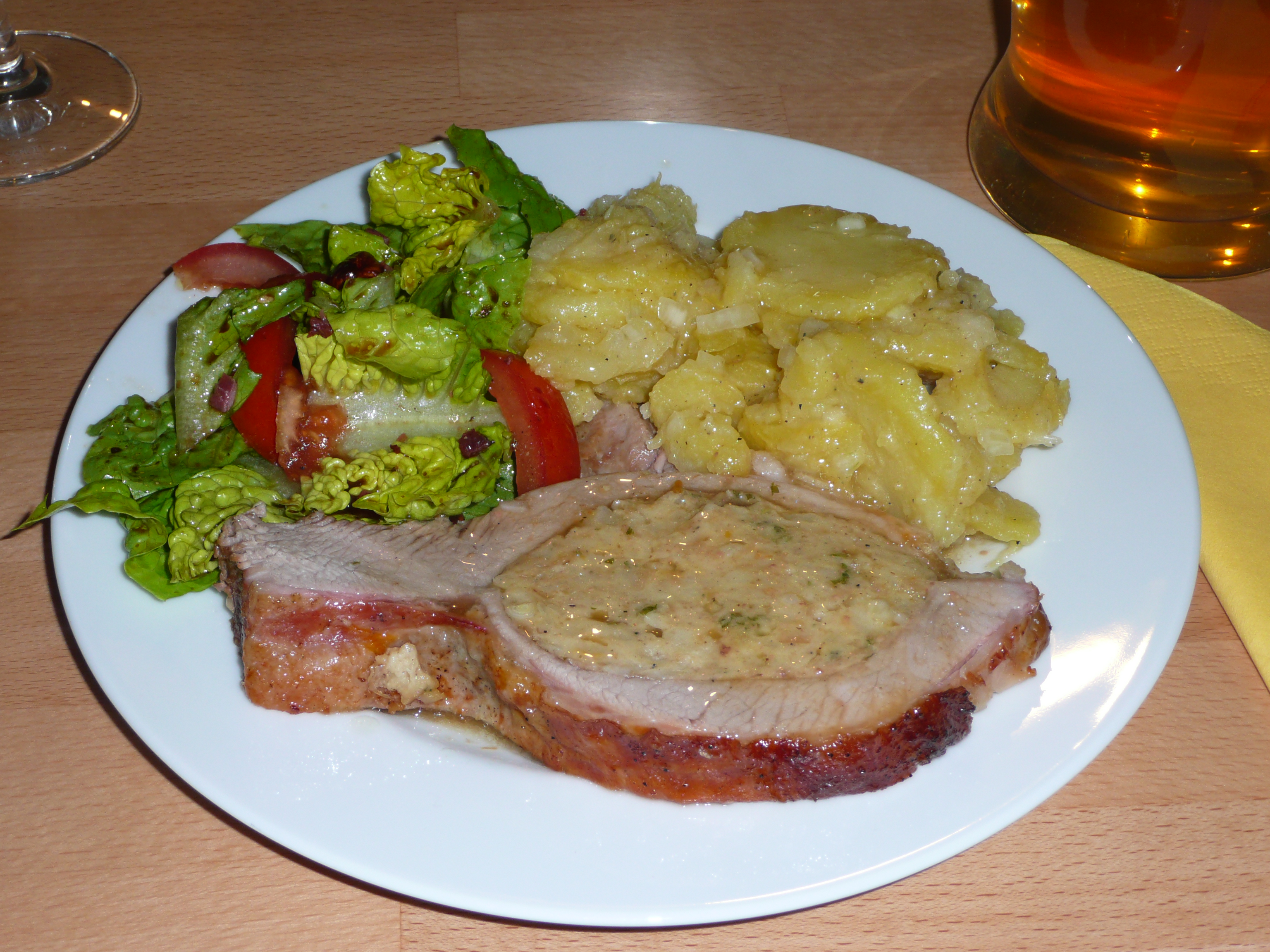
Stuffed veal breast, served with potato salad and green salad
Where on Google Earth #381
For some time now, I started again with “Where on Google Earth“, with little success, however. (For a description what WoGE is, see below the fold. Previous WoGEs are collected by Felix on his blog and a KML file.)
But now, together with my friend Frank (known in the WoGE Archean as “pl”), I found Ole Tjugen’s last WoGE and could explain its geology. (Which I didn’t manage with WoGE #378.) Salt glaciers in south Iran – an interesting phenomenon which I didn’t know about before.
Now I may come up with a new puzzle. I hope it is something easier, to give newcomers a chance. (Schott’s rule is in effect, see below.)
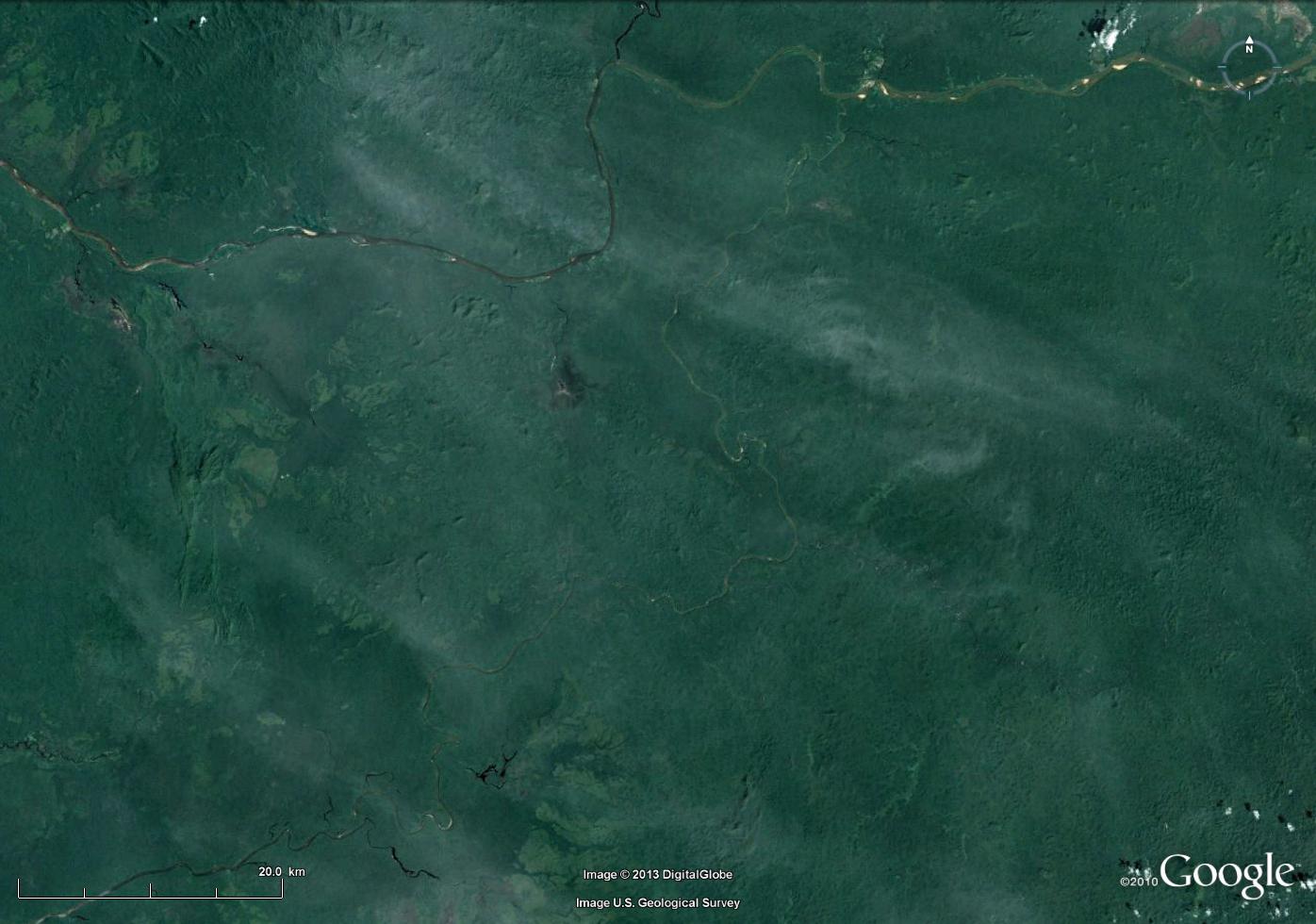
Where on Google Earth #381. Click to embiggen.
Historic maps of Brandenburg

Just recently, the Landesvermessung und Geobasisinformation Brandenburg (LGB) published the Brandenburg parts of the historic survey by Schmettau. The maps were produced between 1767 and 1787 at a scale of 1:50000. As an example, this is Cottbus and surroundings (link takes you to the Brandenburg-Viewer):
Demonstration against Nazis

Today, as every year, the NPD and other Nazis will come to Cottbus to use the 1945 bombings to spread their vile propaganda.
The association "Cottbus bekennt Farbe” organised a counter-demonstration and various other activities. The information on their website is only in German, however. The demonstrations start at 15:30 at the railway station and the university, resp., and meet at 17:30 on the Schillerplatz north of the theater. (South of it, the Nazis will meet.)
Brandenburg parliament closes two universities, founds a new one, without real reason or vision
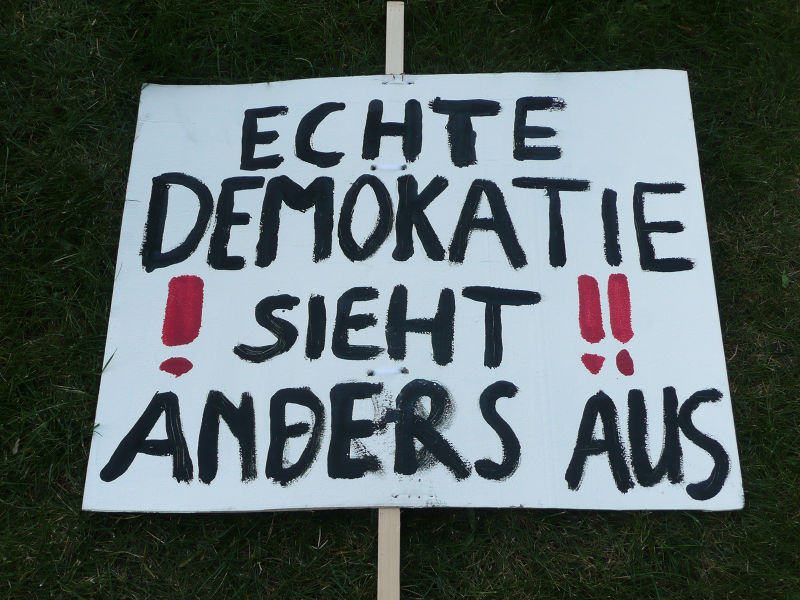
Today, Brandenburg's state parliament has passed a law to close the Brandenburg University of Technology Cottbus and the University for Applied Sciences Lausitz and to found a new Brandenburg University of Technology Cottbus-Senftenberg on 1 July.
This happens after almost one year of so-called “discussions” which never addressed reasons, costs and benefits of the whole procedure.
A sad day for democracy and science in Brandenburg.
Time-lapse Allgäu
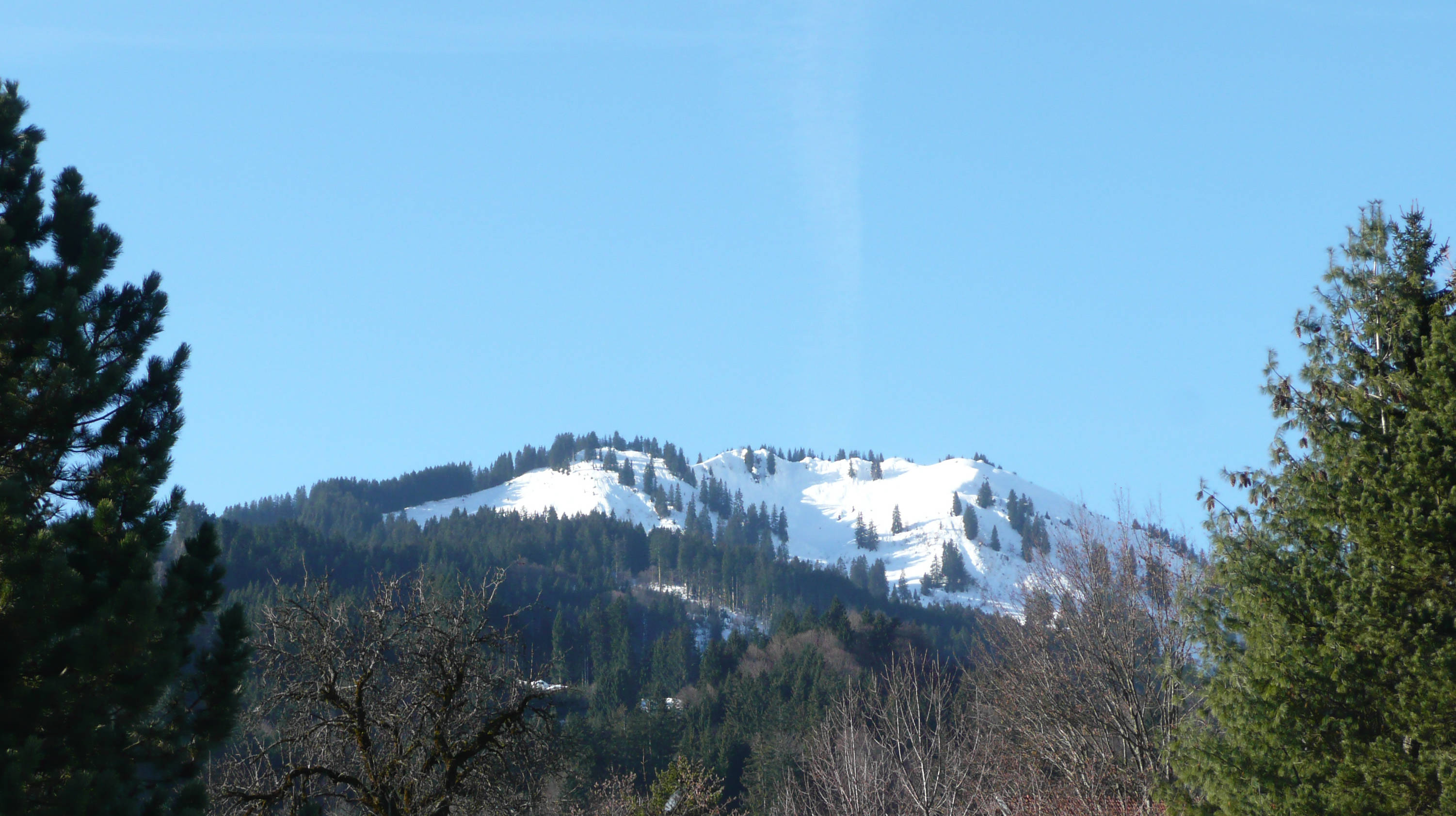
Great time-lapse film by Jonathan Besler, from quite close to where I grew up in the Allgäu (southwest Bavaria, Germany):
Attention, aggresive architecture
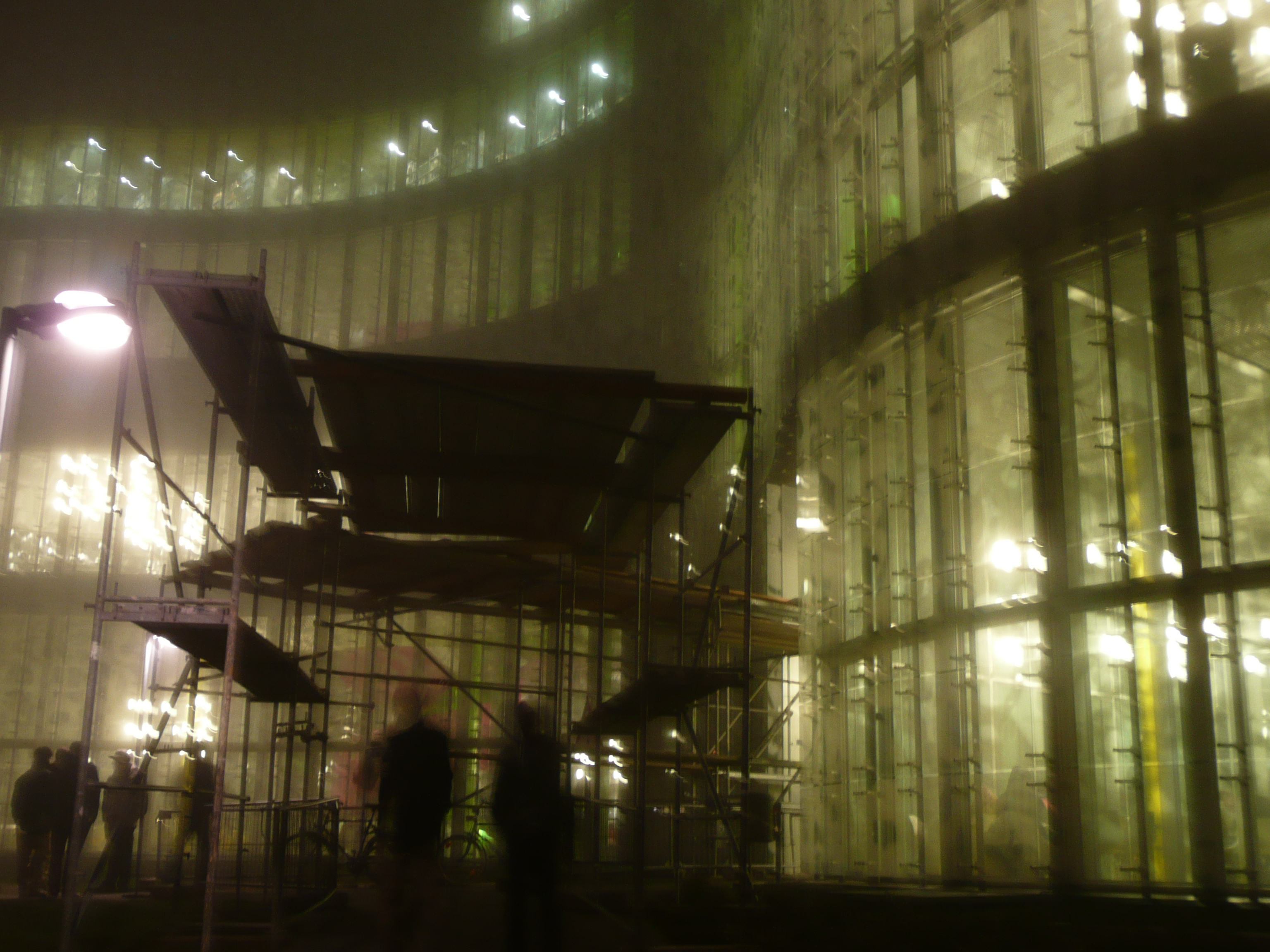
The IKMZ entrance got a temporary roof already some time ago due to dropping glass panes, but now our Herzog & De Meuron jewel is completed by a real masterpiece of Lusatian scaffolding art:
Snow – quite early this year
Just a few days ago, weather was nice; and even yesterday it was only slightly cool (I was still wearing short trousers). And then, this morning, there's snow. This time of year, in Cottbus. Rather surprising. It snowed at least till noon, and slowly changed to rain. This is our garden in the morning:
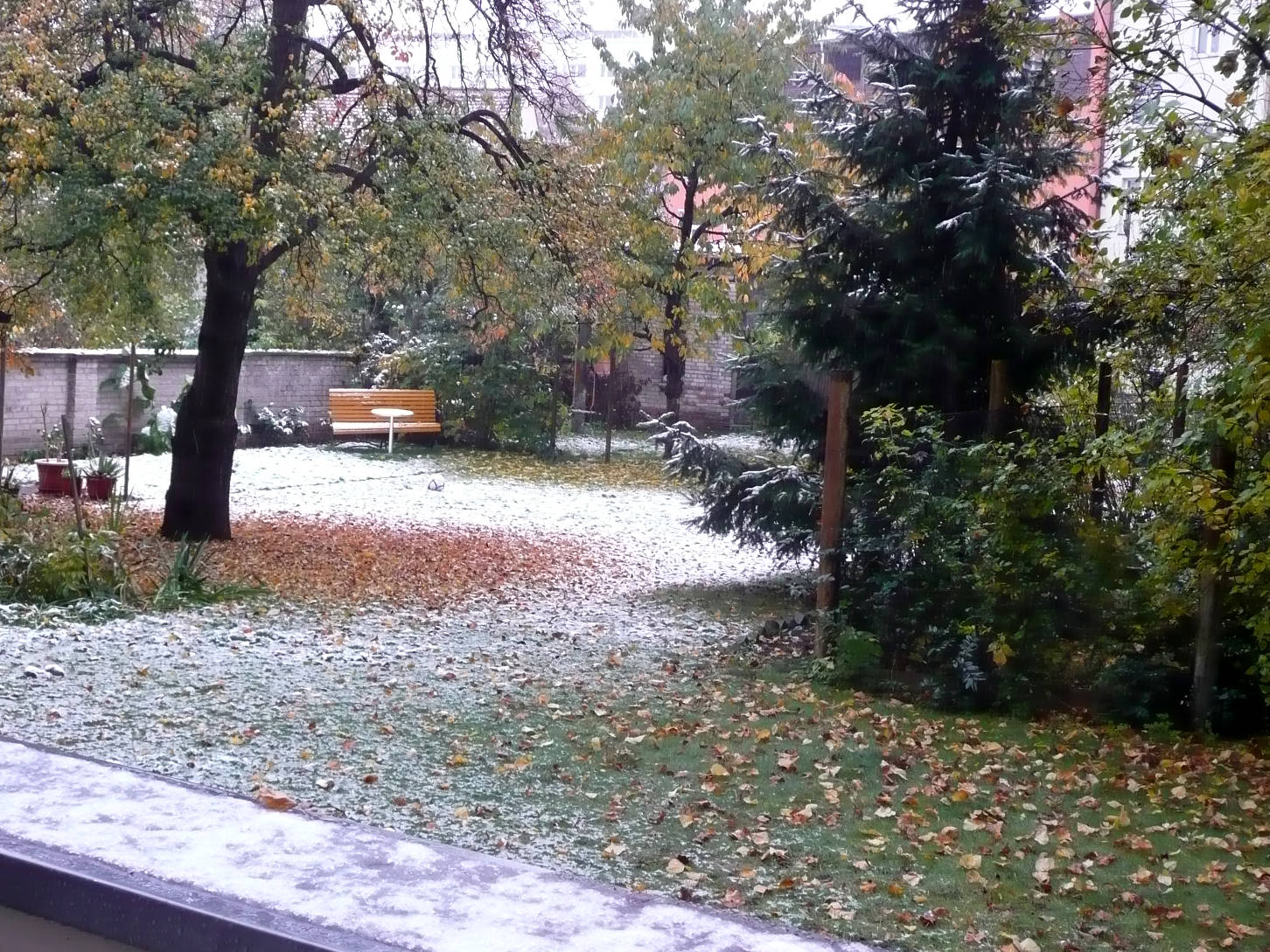
First Snow in Cottbus, 27.10.2012.
The contrast between autumn and winter was quite nice in Puschkin Park: