I have read about this, but hadn't watched it yet. I'd better left it at that – this video is really as bad as people say. 🙁
At least the role of the man is limited to passively ogling women…

In the light of the plans of the ministry of science, research and culture to close the universities in the Lausitz and found a new one, and to counter the negative picture painted by the media, statements of BTU alumni have been collected on the Mittelbau wiki. However, these statements are all in German, as far is I can see.
Also, Mittelbau employees explain why the joined BTU.
You'll find a bit more information in my German post, or ask me for a translation if you're interested.
The magazine Forschung&Lehre (Research&Teaching) of the Deutscher Hochschulverband (German Association of University Professors and Lecturers) published a short interview with Prof. Kunst, who wasn't minister of research and science back then, in its colum „Zu Ende gedacht“ (Thought through to the end) on 8 August 2010.
It contains these two gems:
If I were minister of research and science…
I wouldn't cut down the budget!
Prolonged exposition to Mrs Kunst's (and others') drivel causes massive de-braining. Humour seems the only way to counteract the MWFK's phrase-making facility. Thus, and in preparation for next week's public debate, I have prepared a Buzzword Bingo card:

Update 23.03.12: Now, I've set up a generator that produces always fresh bingo cards. For printing, there's a 2-on-1 version, and for paper-free players a interactive page.

Since a few days, there's another personal blog by a BTU researcher about the current university politics and Mrs Kunst's (and the ministry's) structure plans: btuinsider.wordpress.com. However, is in German only.
Until now, it contains two critical articles (about too-fast implementation and about Mrs Kunst's math skills), but I hope he/she will write more!
Update: Newarticle on the Mittelverteilungsmodell (budget distribution scheme).
I was surprised and delighted by how many people met for today's demonstration. At about 4pm, we gathered at BTU's Forum and then walked through town.
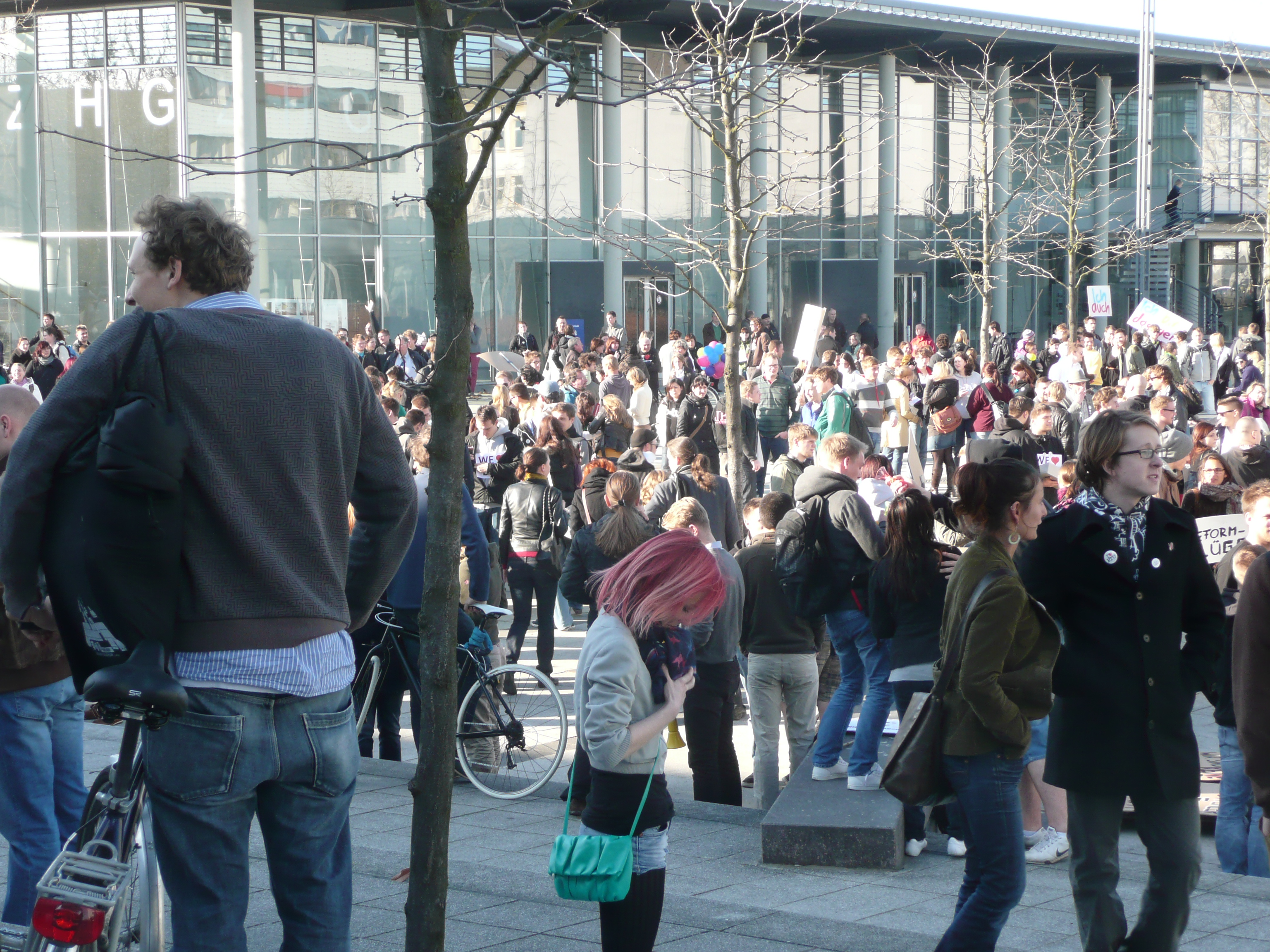
Hochschuldemo 19.03.12 – Audimax BTU
The destination was the Stadthaus on Altmarkt, where the City Parliament (Stadtverordnetenversammlung, SVV) met for a special session on the future of the universities in the Lusatia region. There, the minister for science, research and cultur, Mrs Kunst, die chairman of the Lusatia Evaluation Commission (Lausitzkommission), Prof. Emmerich, the presidents of both universities and representatives of the students were to present their opinions and arguments on the closing of the existing and founding of a new “energy university”, which was proposed by the minister.
Again, if you're interested in a translation, tell me.
I was able to find the last WoGE by Felix Bossert rather quickly. (I explained why in the comments there.) For a description what WoGE is, see below the fold. Previous WoGEs are collected by Felix on his blog and a KML file.
Now I may come up with a new puzzle. Again I try to offer something easier, to give newcomers a chance.
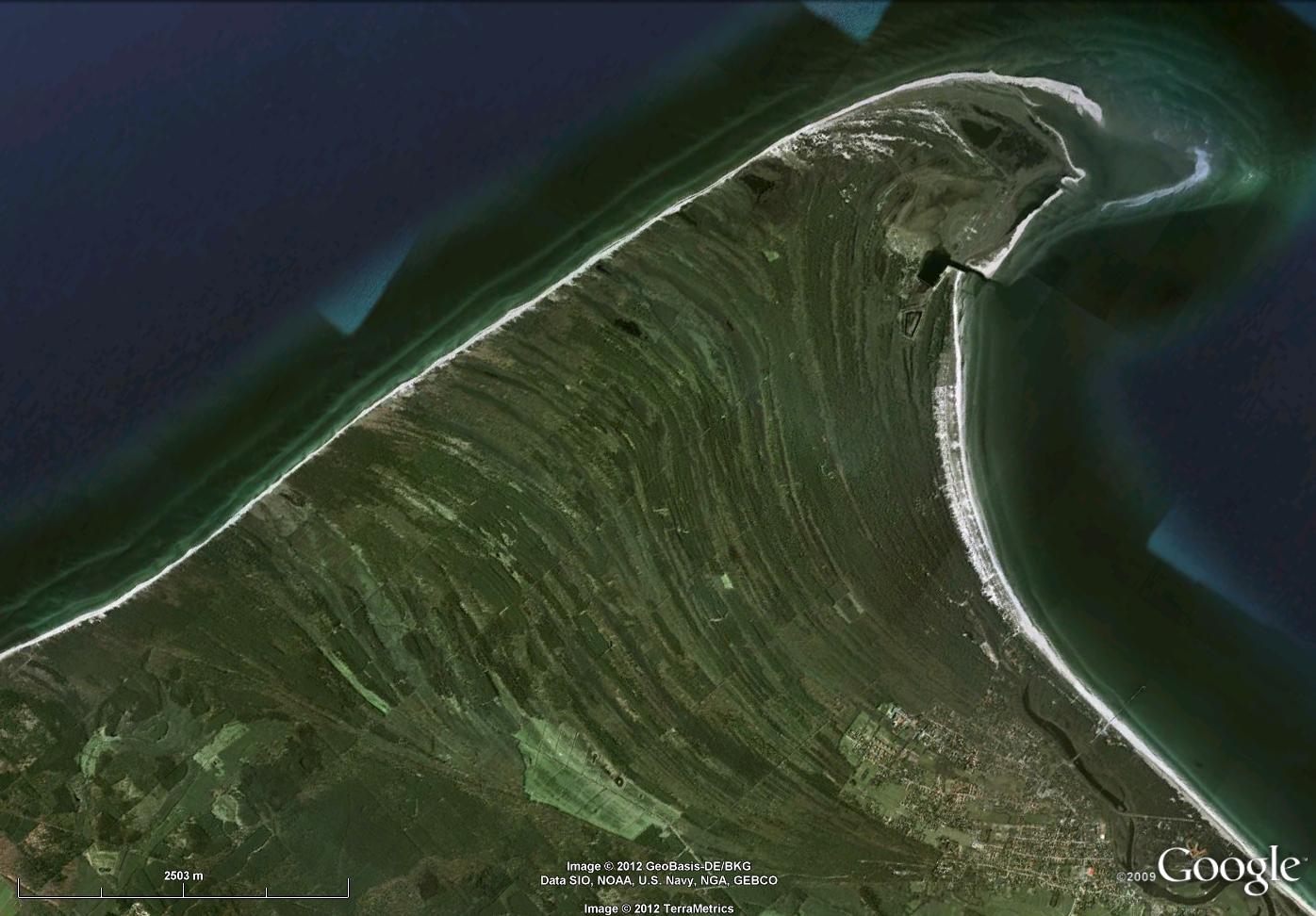
Where on Google Earth #336. Click to embiggen.

Now, Mr Wulff, the just-in-time retired Federal President, has been granted the honorary salary (“Ehrensold”, currently 199000€ ≈ $265000 plus office and a car with driver). How very fitting that this is decided by the Office of the Federal President, the head of which has been appointed by Wulff himself. (Sorry, the newspaper articles are in German only; perhaps Google Translate can make something of them.) In my opinion, the concept of “Ehre” (honour) is a bit peculiar, with some old-fashioned Germanic tinge to it, but comprises a necessary ingredient, which Wulff is lacking completely: common decency. Listening to any sense of decency, he would have waived the honorary salary, or at least postponed it to after the legal proceedings. After I had cooled down, I made a mistake:
I tried to imagine these 199000€ in proportion.

The EnergyMap project of the Deutsche Gesellschaft für Sonnenenergie e.V. (German Society for Solar Energy) presents the data that is collected as a requirement of the Renewable Energy Act. Sadly, the site is in German only. I'll give some pointers and translations to the interesting areas.
The energy map (Energiekarte) shows the distribution of various kinds of renewable energy (erneuerbare Energien, abbrev.
Brandenburg's unviersities will get less money in the next years, despite a slight increase in the ministry's budget. That's because pension and other costs will rise even more. That's a rather dark perspective, especially for the universities here in Lusatia (BTU and HL) which the ministry wants to merge.
Again, if you're interested in a translation of my German article, post a comment and I will provide it.
For quite some time, I always was too slow to solve the WoGE puzzles, if I even managed to give a try at all. (For a description what WoGE is, see below the fold. Previous WoGEs are collected on Felix Bossert's blog and in Ron Schott's KML.)
Matthew's WoGE 331 was rather difficult, especially since I completely missed one special feature. However, the remaining information in the pictures and text (Matthew published several clues after some time) where enough, with some persistence, to find that volcanic island located in a back-arc basin.
Now I may come up with a new puzzle. For a change, it should be a bit easier (I hope), to give newcomers a chance.

Where on Google Earth #332. Click to embiggen.
Given the current financial situation: no. 😉 This post in German is about recent discussions on the two universities in the Cottbus area, and their possible merger. Media frequently say the BTU's research performance is abysmal, which is has a grain of salt to it, but is mainly an exaggerated, out-of-context opinon of a recent commission report. If you're interested in a translation of my German article, post a comment and I will provide it.
I wish everyone who is still reading my blog after the long stretch of silence a happy new year!
These are all the WoGEs I posted, nicely collected, without any hints (sometimes I give some clues in the introduction) and direct links to the JPEG file, so there is no danger of accidentally reading the solution. 😉 (This may be an advantage over the category archive.)
This page is also linked in the sidebar to the right, under “overview pages”.
Next, there will be a collection of all WoGEs I solved.
A company, the name of which I withhold because of the ongoing innovative product development, is currently testing their new product “corundum rapid abrasion paper” (c.r.a.p.) at our university.
This paper has several special properties:
However, there are still some disadvantages:
Because of cost reasons and in order to assess the human component (“user interaction”, “skin feel”, reaction to larger amounts of blood), the tests are not performed by the FMPA (materials research and testing centre), but – sadly – directly in the various university department offices.
We're not quite happy with the location of the test stand. Although it's situated in a discreet and undisturbed location, conflicts of interest must be expected:

blog.effjot.net steht unter einer Creative Commons Namensnennung-Keine kommerzielle Nutzung-Weitergabe unter gleichen Bedingungen 3.0 Deutschland Lizenz.
Theme based on blog.txt by Scott Allan Wallick , modified and translated by Florian Jenn .